
The Silk Road 2.0: Connecting MENA Entrepreneurs to Global Finance
The Middle East and North Africa (MENA) region is currently the most exciting frontier for digital entrepreneurship. From the tech hubs in Riyadh to the creative agencies in Cairo and Casablanca, talent is everywhere.
L. D.
1/15/20262 min read
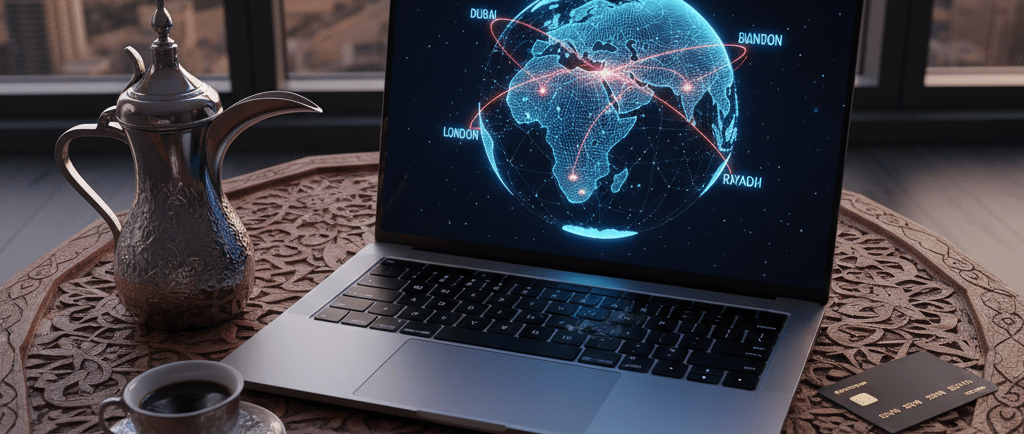
In 2026, the digital entrepreneur in the Arab world doesn't just need a local bank account; they need a Global Financial Bridge. This is how you connect your local operation to the world's liquid capital.
1. Hedging Against Devaluation: The USD/EUR Anchor
Many entrepreneurs in the region face the constant threat of currency devaluation. Holding your entire business capital in a local currency can be a massive risk.
The L.D. Strategy: Use Wise or Revolut Business to immediately convert your local revenue or international payouts into a stable currency anchor (USD or EUR). In 2026, digital wallets act as a "personal hedge fund," allowing you to preserve the purchasing power of your hard-earned profits while the local market fluctuates.
2. Navigating the "High Risk" Label
It is a frustrating reality that many global platforms still flag transactions from certain MENA countries as "High Risk." This leads to blocked payments and endless verification loops.
To minimize this, L.D. recommends:
Establish a Professional Entity: If your volume is significant, consider an e-Residency in Estonia or a Free Zone company in Dubai. This gives you a "clean" corporate identity that global fintechs trust.
Detailed Invoicing: Don't just send a request for money. Use professional invoicing software that clearly states the service provided, the client's tax ID, and the terms. Clarity is the antidote to suspicion.
3. Payoneer: The Essential Tool for the Arab Freelancer
While Wise is excellent for transfers, Payoneer remains the king in many parts of the Arab world due to its extensive network and its physical Mastercard, which often works where others fail.
For a developer in Amman or a designer in Dubai, having a Payoneer card means you can withdraw your global earnings at local ATMs or pay for business tools without your local bank asking 20 questions about the source of the funds. It is, for many, the only reliable door to the global market.
4. The Dubai Hub: More Than Just a Tax Haven
For the Arab entrepreneur, Dubai is not just a place to visit; it’s a financial operating system. In 2026, having a residency or a business setup in the UAE acts as a "Green Pass" for the global banking world.
If you are scaling a Media Buying operation or an e-commerce brand, moving your financial "headquarters" to the UAE simplifies your relationship with platforms like Stripe, Meta, and Google, while keeping you within the cultural and geographical heart of the region.
5. Cultural Business Etiquette in a Digital World
In the Arab world, business is built on trust and relationships (Wasta). Even in the digital space, this matters. When dealing with high-value clients or partners, the professionalism of your financial setup—the speed at which you pay and the transparency of your banking—is a direct reflection of your honor and reliability as a businessman.
Final Thoughts: The Future is Borderless
The barriers that once held back the Arab entrepreneur are falling. With the right combination of fintech tools and a strategic global mindset, your location is no longer a limitation; it is a competitive advantage.
The new Silk Road is made of code, stablecoins, and digital bank accounts. And L.D. is here to make sure you lead the caravan.
Build the bridge. Lead the caravan.